Buy socialbookmarking.org ?
We are moving the project
socialbookmarking.org .
Are you interested in purchasing the domain
socialbookmarking.org ?
domain@kv-gmbh.de · 0541-91531010
Buy socialbookmarking.org ?
What is an isometry with non-orthogonal corners?
An isometry with non-orthogonal corners is a transformation that preserves distances and angles, but the corners of the shape are not at right angles to each other. This means that the shape is still congruent to its original form after the transformation, but the angles at the corners are not 90 degrees. Isometries with non-orthogonal corners can include rotations, reflections, translations, and glide reflections. These transformations are important in geometry and can be used to study the properties of shapes and figures. **
What is an isometry with non-orthogonal vertices?
An isometry with non-orthogonal vertices is a transformation that preserves distances and angles between points, but the vertices are not at right angles to each other. This means that the shape is still congruent to its original form, but the angles between the edges are not necessarily 90 degrees. Isometries with non-orthogonal vertices can include translations, rotations, reflections, and glide reflections. These transformations are important in geometry and can help us understand the properties of shapes in different orientations. **

Similar search terms for Non-orthogonal
Top-Angebote
Products related to Non-orthogonal:
-
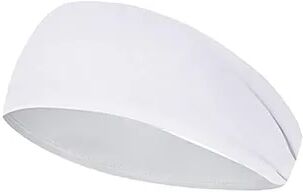
Daily Discovery Sports Headband Non Slip Quick Dry Headband For Running, Yoga & Fitness whiteStay focused on every workout without constantly adjusting your hair. The non slip headband is designed for active men and women who want dependable comfort during exercise, yoga, running, and daily training. Made with lightweight, moisturewicking...29,97 $*Shipping: 0,00 $Secure redirect to the provider
-
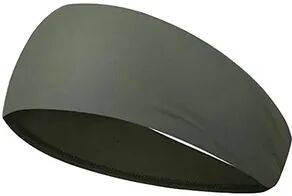
Daily Discovery Sports Headband Non Slip Quick Dry Headband For Running, Yoga & Fitness greenStay focused on every workout without constantly adjusting your hair. The non slip headband is designed for active men and women who want dependable comfort during exercise, yoga, running, and daily training. Made with lightweight, moisturewicking...29,97 $*Shipping: 0,00 $Secure redirect to the provider
-
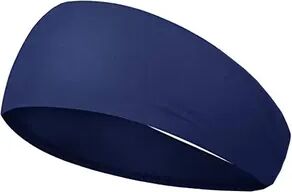
Daily Discovery Sports Headband Non Slip Quick Dry Headband For Running, Yoga & Fitness blueStay focused on every workout without constantly adjusting your hair. The non slip headband is designed for active men and women who want dependable comfort during exercise, yoga, running, and daily training. Made with lightweight, moisturewicking...29,97 $*Shipping: 0,00 $Secure redirect to the provider
-
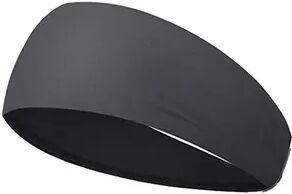
Daily Discovery Sports Headband Non Slip Quick Dry Headband For Running, Yoga & Fitness dark GrayStay focused on every workout without constantly adjusting your hair. The non slip headband is designed for active men and women who want dependable comfort during exercise, yoga, running, and daily training. Made with lightweight, moisturewicking...29,97 $*Shipping: 0,00 $Secure redirect to the provider
-
What is an orthogonal vector?
An orthogonal vector is a vector that is perpendicular to another vector. In other words, two vectors are orthogonal if their dot product is zero. Geometrically, this means that the two vectors form a 90-degree angle with each other. Orthogonal vectors are important in many areas of mathematics and physics, including linear algebra and vector calculus. **
-
What does the term orthogonal mean?
The term orthogonal refers to two things being perpendicular or at right angles to each other. In mathematics, it often refers to vectors or matrices that are perpendicular to each other. In a broader sense, it can also refer to any two things that are independent or unrelated to each other. **
-
Are linearly independent vectors always orthogonal?
No, linearly independent vectors are not always orthogonal. Linear independence means that no vector in the set can be written as a linear combination of the others, while orthogonality means that the vectors are perpendicular to each other. It is possible for linearly independent vectors to be orthogonal, but it is not a guarantee. For example, in three-dimensional space, the vectors (1, 0, 0), (0, 1, 0), and (0, 0, 1) are linearly independent and orthogonal, but the vectors (1, 1, 0) and (0, 1, 1) are linearly independent but not orthogonal. **
-
When are planes and lines orthogonal?
Planes and lines are orthogonal when the line is perpendicular to the plane. This means that the line forms a 90-degree angle with the plane, creating a right angle. In other words, the direction of the line is perpendicular to the direction of the plane. This relationship is important in geometry and engineering, as it affects the intersection and orientation of different geometric elements. **

What is a proof of two orthogonal?
Two vectors are considered orthogonal if their dot product is equal to zero. This means that the angle between the two vectors is 90 degrees, forming a right angle. Mathematically, if vectors u and v are orthogonal, then u · v = 0. This property can be used to prove that two vectors are orthogonal by calculating their dot product and showing that it equals zero. **
How do you determine the orthogonal complement?
To determine the orthogonal complement of a subspace, you first need to find a basis for the subspace. Then, you can use the Gram-Schmidt process to find an orthogonal basis for the subspace. Finally, the orthogonal complement is the set of all vectors in the vector space that are orthogonal to every vector in the basis of the subspace. **
Top-Angebote
Products related to Non-orthogonal:
-
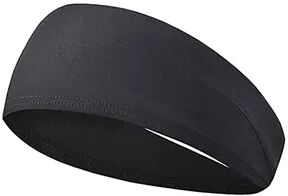
Daily Discovery Sports Headband Non Slip Quick Dry Headband For Running, Yoga & Fitness blackStay focused on every workout without constantly adjusting your hair. The non slip headband is designed for active men and women who want dependable comfort during exercise, yoga, running, and daily training. Made with lightweight, moisturewicking...29,97 $*Shipping: 0,00 $Secure redirect to the provider
-
Daily Discovery Resistance Band Trainer With Non Slip Handles For Home Gym & Core Workouts purpleTransform the way you work out without leaving home. This Resistance Band Trainer is designed for anyone looking to strengthen their core, tone muscles, and improve flexibility with one compact fitness tool. Featuring four progressive resistance...33,97 $*Shipping: 0,00 $Secure redirect to the provider
-
Daily Discovery Sports Headband Non Slip Quick Dry Headband For Running, Yoga & Fitness whiteStay focused on every workout without constantly adjusting your hair. The non slip headband is designed for active men and women who want dependable comfort during exercise, yoga, running, and daily training. Made with lightweight, moisturewicking...29,97 $*Shipping: 0,00 $Secure redirect to the provider
-
Daily Discovery Sports Headband Non Slip Quick Dry Headband For Running, Yoga & Fitness greenStay focused on every workout without constantly adjusting your hair. The non slip headband is designed for active men and women who want dependable comfort during exercise, yoga, running, and daily training. Made with lightweight, moisturewicking...29,97 $*Shipping: 0,00 $Secure redirect to the provider
-
What is an isometry with non-orthogonal corners?
An isometry with non-orthogonal corners is a transformation that preserves distances and angles, but the corners of the shape are not at right angles to each other. This means that the shape is still congruent to its original form after the transformation, but the angles at the corners are not 90 degrees. Isometries with non-orthogonal corners can include rotations, reflections, translations, and glide reflections. These transformations are important in geometry and can be used to study the properties of shapes and figures. **
-
What is an isometry with non-orthogonal vertices?
An isometry with non-orthogonal vertices is a transformation that preserves distances and angles between points, but the vertices are not at right angles to each other. This means that the shape is still congruent to its original form, but the angles between the edges are not necessarily 90 degrees. Isometries with non-orthogonal vertices can include translations, rotations, reflections, and glide reflections. These transformations are important in geometry and can help us understand the properties of shapes in different orientations. **
-
What is an orthogonal vector?
An orthogonal vector is a vector that is perpendicular to another vector. In other words, two vectors are orthogonal if their dot product is zero. Geometrically, this means that the two vectors form a 90-degree angle with each other. Orthogonal vectors are important in many areas of mathematics and physics, including linear algebra and vector calculus. **
-
What does the term orthogonal mean?
The term orthogonal refers to two things being perpendicular or at right angles to each other. In mathematics, it often refers to vectors or matrices that are perpendicular to each other. In a broader sense, it can also refer to any two things that are independent or unrelated to each other. **
Similar search terms for Non-orthogonal
-
Daily Discovery Sports Headband Non Slip Quick Dry Headband For Running, Yoga & Fitness blueStay focused on every workout without constantly adjusting your hair. The non slip headband is designed for active men and women who want dependable comfort during exercise, yoga, running, and daily training. Made with lightweight, moisturewicking...29,97 $*Shipping: 0,00 $Secure redirect to the provider
-
Daily Discovery Sports Headband Non Slip Quick Dry Headband For Running, Yoga & Fitness dark GrayStay focused on every workout without constantly adjusting your hair. The non slip headband is designed for active men and women who want dependable comfort during exercise, yoga, running, and daily training. Made with lightweight, moisturewicking...29,97 $*Shipping: 0,00 $Secure redirect to the provider
-
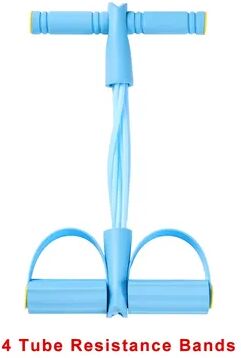
Daily Discovery Resistance Band Trainer With Non Slip Handles For Home Gym & Core Workouts blueTransform the way you work out without leaving home. This Resistance Band Trainer is designed for anyone looking to strengthen their core, tone muscles, and improve flexibility with one compact fitness tool. Featuring four progressive resistance...33,97 $*Shipping: 0,00 $Secure redirect to the provider
-
Daily Discovery Resistance Band Trainer With Non Slip Handles For Home Gym & Core Workouts purpleTransform the way you work out without leaving home. This Resistance Band Trainer is designed for anyone looking to strengthen their core, tone muscles, and improve flexibility with one compact fitness tool. Featuring four progressive resistance...33,97 $*Shipping: 0,00 $Secure redirect to the provider
-
Are linearly independent vectors always orthogonal?
No, linearly independent vectors are not always orthogonal. Linear independence means that no vector in the set can be written as a linear combination of the others, while orthogonality means that the vectors are perpendicular to each other. It is possible for linearly independent vectors to be orthogonal, but it is not a guarantee. For example, in three-dimensional space, the vectors (1, 0, 0), (0, 1, 0), and (0, 0, 1) are linearly independent and orthogonal, but the vectors (1, 1, 0) and (0, 1, 1) are linearly independent but not orthogonal. **
-
When are planes and lines orthogonal?
Planes and lines are orthogonal when the line is perpendicular to the plane. This means that the line forms a 90-degree angle with the plane, creating a right angle. In other words, the direction of the line is perpendicular to the direction of the plane. This relationship is important in geometry and engineering, as it affects the intersection and orientation of different geometric elements. **
-
What is a proof of two orthogonal?
Two vectors are considered orthogonal if their dot product is equal to zero. This means that the angle between the two vectors is 90 degrees, forming a right angle. Mathematically, if vectors u and v are orthogonal, then u · v = 0. This property can be used to prove that two vectors are orthogonal by calculating their dot product and showing that it equals zero. **
-
How do you determine the orthogonal complement?
To determine the orthogonal complement of a subspace, you first need to find a basis for the subspace. Then, you can use the Gram-Schmidt process to find an orthogonal basis for the subspace. Finally, the orthogonal complement is the set of all vectors in the vector space that are orthogonal to every vector in the basis of the subspace. **
* All prices are inclusive of VAT and, if applicable, plus shipping costs. The offer information is based on the details provided by the respective shop and is updated through automated processes. Real-time updates do not occur, so deviations can occur in individual cases. ** Note: Parts of this content were created by AI.