Buy socialbookmarking.org ?
We are moving the project
socialbookmarking.org .
Are you interested in purchasing the domain
socialbookmarking.org ?
domain@kv-gmbh.de · 0541-91531010
Buy socialbookmarking.org ?
Is the square axis-symmetric, but not point-symmetric?
Yes, a square is axis-symmetric, meaning it has rotational symmetry around its center axis. However, it is not point-symmetric, as it does not have reflectional symmetry across any point within the shape. This is because a square does not have a point that can be reflected across to create a matching image. **
Can a rational function be both axis-symmetric and point-symmetric?
No, a rational function cannot be both axis-symmetric and point-symmetric. If a rational function is axis-symmetric, it means that it is symmetric with respect to the y-axis, while point-symmetry would require symmetry with respect to the origin. These two types of symmetry are mutually exclusive, so a rational function cannot exhibit both types of symmetry simultaneously. **


Similar search terms for Symmetric
Top-Angebote
Products related to Symmetric:
-
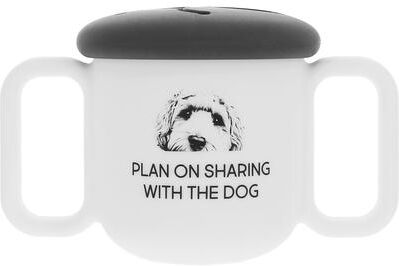
Pavilion Sharing with the Dog Silicone Snack BowlMake snack time more fun with this pet-inspired silicone snack bowl featuring a playful dog illustration and humorous sentiment. Durable, portable, and designed with a secure lid, it's perfect for enjoying snacks at home, work, school, or on the go23,19 $*Shipping: 0,00 $Secure redirect to the provider


-
Which capital and lowercase letters are rotationally symmetric and reflection symmetric?
The capital letters that are both rotationally symmetric and reflection symmetric are "I", "O", "S", "H", "X", and "Z". The lowercase letters that are both rotationally symmetric and reflection symmetric are "o" and "x". These letters look the same when rotated 180 degrees or when reflected across a vertical line. **
-
Which uppercase and lowercase letters are rotationally symmetric and reflection symmetric?
The uppercase letters that are both rotationally symmetric and reflection symmetric are 'H', 'I', 'N', 'O', 'S', 'X', and 'Z'. The lowercase letters that are both rotationally symmetric and reflection symmetric are 'o' and 'x'. These letters look the same when rotated 180 degrees or when reflected across a vertical axis. **
-
Can a polynomial function be both axis-symmetric and point-symmetric?
No, a polynomial function cannot be both axis-symmetric and point-symmetric. If a polynomial function is axis-symmetric, it means that it is symmetric with respect to the y-axis, while if it is point-symmetric, it means that it is symmetric with respect to the origin. These two types of symmetry are mutually exclusive, so a polynomial function cannot exhibit both types of symmetry simultaneously. **
-
Which capital letters of the alphabet are point-symmetric and axis-symmetric?
The capital letters of the alphabet that are both point-symmetric and axis-symmetric are the letter "H" and the letter "I". These letters have vertical symmetry as well as symmetry when rotated 180 degrees. This means that they look the same when flipped vertically or rotated 180 degrees around their center point. **

Which capital letters of the alphabet are point symmetric and axis symmetric?
The capital letters of the alphabet that are point symmetric are A, H, I, M, O, T, U, V, W, X, and Y. These letters look the same when rotated 180 degrees around their center point. The capital letters that are axis symmetric are A, H, I, M, O, T, U, V, W, X, and Y. These letters look the same when reflected across a vertical axis. **
Does "symmetric to the origin" always mean point symmetric in profile tasks?
No, "symmetric to the origin" does not always mean point symmetric in profile tasks. In profile tasks, "symmetric to the origin" means that the object is symmetric with respect to the origin of the coordinate system, which is the point (0,0). This means that if you reflect the object across the x-axis and the y-axis, it will look the same. Point symmetry, on the other hand, means that the object is symmetric with respect to a specific point, not necessarily the origin. Therefore, while point symmetry implies symmetry to the origin, symmetry to the origin does not always imply point symmetry in profile tasks. **
Top-Angebote
Products related to Symmetric:
-
Is the square axis-symmetric, but not point-symmetric?
Yes, a square is axis-symmetric, meaning it has rotational symmetry around its center axis. However, it is not point-symmetric, as it does not have reflectional symmetry across any point within the shape. This is because a square does not have a point that can be reflected across to create a matching image. **
-
Can a rational function be both axis-symmetric and point-symmetric?
No, a rational function cannot be both axis-symmetric and point-symmetric. If a rational function is axis-symmetric, it means that it is symmetric with respect to the y-axis, while point-symmetry would require symmetry with respect to the origin. These two types of symmetry are mutually exclusive, so a rational function cannot exhibit both types of symmetry simultaneously. **
-
Which capital and lowercase letters are rotationally symmetric and reflection symmetric?
The capital letters that are both rotationally symmetric and reflection symmetric are "I", "O", "S", "H", "X", and "Z". The lowercase letters that are both rotationally symmetric and reflection symmetric are "o" and "x". These letters look the same when rotated 180 degrees or when reflected across a vertical line. **
-
Which uppercase and lowercase letters are rotationally symmetric and reflection symmetric?
The uppercase letters that are both rotationally symmetric and reflection symmetric are 'H', 'I', 'N', 'O', 'S', 'X', and 'Z'. The lowercase letters that are both rotationally symmetric and reflection symmetric are 'o' and 'x'. These letters look the same when rotated 180 degrees or when reflected across a vertical axis. **
Similar search terms for Symmetric
-
Pavilion Sharing with the Dog Silicone Snack BowlMake snack time more fun with this pet-inspired silicone snack bowl featuring a playful dog illustration and humorous sentiment. Durable, portable, and designed with a secure lid, it's perfect for enjoying snacks at home, work, school, or on the go23,19 $*Shipping: 0,00 $Secure redirect to the provider
-
Enesco/Dept 56 Sharing the Load Clothtique Red , RedSanta doesn't seem to mind Sharing the Load with a little helper. Dressed in a red and white suit, Santa carries a green bag with gold leafy scroll designs and a list over his shoulder and holds a present in the other hand. The bag has presents,...99,00 $*Shipping: 18,95 $Secure redirect to the provider
-
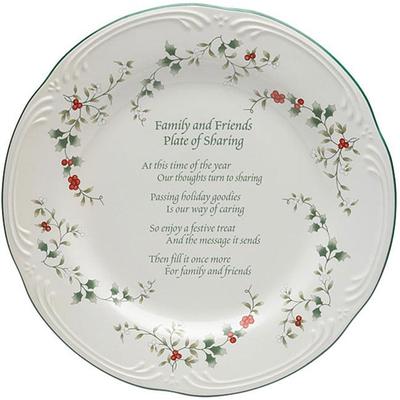
Pfaltzgraff Winterberry 'Family and Friends Plate of Sharing' PlatterCelebrate all through the season with a Winterberry 'Family and Friends Plate of Sharing' plate Serveware is ideal for entertaining and serving Platter has a creamy background with delicately rendered holly branches25,82 $*Shipping: 0,00 $Secure redirect to the provider
-
Can a polynomial function be both axis-symmetric and point-symmetric?
No, a polynomial function cannot be both axis-symmetric and point-symmetric. If a polynomial function is axis-symmetric, it means that it is symmetric with respect to the y-axis, while if it is point-symmetric, it means that it is symmetric with respect to the origin. These two types of symmetry are mutually exclusive, so a polynomial function cannot exhibit both types of symmetry simultaneously. **
-
Which capital letters of the alphabet are point-symmetric and axis-symmetric?
The capital letters of the alphabet that are both point-symmetric and axis-symmetric are the letter "H" and the letter "I". These letters have vertical symmetry as well as symmetry when rotated 180 degrees. This means that they look the same when flipped vertically or rotated 180 degrees around their center point. **
-
Which capital letters of the alphabet are point symmetric and axis symmetric?
The capital letters of the alphabet that are point symmetric are A, H, I, M, O, T, U, V, W, X, and Y. These letters look the same when rotated 180 degrees around their center point. The capital letters that are axis symmetric are A, H, I, M, O, T, U, V, W, X, and Y. These letters look the same when reflected across a vertical axis. **
-
Does "symmetric to the origin" always mean point symmetric in profile tasks?
No, "symmetric to the origin" does not always mean point symmetric in profile tasks. In profile tasks, "symmetric to the origin" means that the object is symmetric with respect to the origin of the coordinate system, which is the point (0,0). This means that if you reflect the object across the x-axis and the y-axis, it will look the same. Point symmetry, on the other hand, means that the object is symmetric with respect to a specific point, not necessarily the origin. Therefore, while point symmetry implies symmetry to the origin, symmetry to the origin does not always imply point symmetry in profile tasks. **
* All prices are inclusive of VAT and, if applicable, plus shipping costs. The offer information is based on the details provided by the respective shop and is updated through automated processes. Real-time updates do not occur, so deviations can occur in individual cases. ** Note: Parts of this content were created by AI.