Buy socialbookmarking.org ?
We are moving the project
socialbookmarking.org .
Are you interested in purchasing the domain
socialbookmarking.org ?
domain@kv-gmbh.de · 0541-91531010
Buy socialbookmarking.org ?
How do I interpret phylograms and cladograms?
Phylograms and cladograms are both types of tree diagrams used to represent evolutionary relationships among species. In a phylogram, the branch lengths represent the amount of evolutionary change, while in a cladogram, the branch lengths are typically uniform and do not convey information about the amount of change. Both types of diagrams show the branching patterns of evolutionary relationships, with species located at the tips of the branches. By analyzing the branching patterns and the lengths of the branches, scientists can interpret the relatedness and divergence times of the species represented in the diagram. **
Can one create family trees and cladograms using taxonomy?
Yes, one can create family trees and cladograms using taxonomy. Taxonomy is the science of classifying organisms into different categories based on their characteristics and evolutionary relationships. By organizing organisms into groups based on their similarities and differences, taxonomists can create family trees that show the evolutionary history and relationships between different species. Cladograms, which are branching diagrams that show these relationships, can also be constructed using taxonomic data to visually represent the evolutionary history of a group of organisms. **


Similar search terms for Cladograms
Top-Angebote
Products related to Cladograms:
-
Pavilion Sharing with the Dog Silicone Snack BowlMake snack time more fun with this pet-inspired silicone snack bowl featuring a playful dog illustration and humorous sentiment. Durable, portable, and designed with a secure lid, it's perfect for enjoying snacks at home, work, school, or on the go23,19 $*Shipping: 0,00 $Secure redirect to the provider
-
Enesco/Dept 56 Sharing the Load Clothtique Red , RedSanta doesn't seem to mind Sharing the Load with a little helper. Dressed in a red and white suit, Santa carries a green bag with gold leafy scroll designs and a list over his shoulder and holds a present in the other hand. The bag has presents,...99,00 $*Shipping: 18,95 $Secure redirect to the provider




-
Can one create phylogenetic trees and cladograms using taxonomy?
Yes, one can create phylogenetic trees and cladograms using taxonomy. Taxonomy, the science of classifying organisms based on shared characteristics, forms the basis for constructing phylogenetic trees and cladograms. By organizing organisms into groups based on their evolutionary relationships, taxonomic classifications can be used to create visual representations of these relationships in the form of phylogenetic trees and cladograms. These tools help researchers understand the evolutionary history and relatedness of different species. **
-
How can I prevent photo curation on Apple?
To prevent photo curation on Apple, you can disable the "For You" tab in the Photos app. This tab uses machine learning to curate and display your photos in different categories. To disable it, go to the Photos app, tap on the "For You" tab, and then tap on the "See All" button. From there, tap on the three-dot icon in the top right corner and select "Turn off For You." This will prevent the app from curating your photos. **
-
What is C networking?
C networking refers to the use of the C programming language to develop networking applications. C is a powerful and efficient language that allows developers to create low-level network programming code for tasks such as socket programming, data transmission, and network protocol implementation. C networking is commonly used in the development of network servers, clients, and other network-related applications due to its speed and flexibility in handling network communication. By using C for networking, developers have fine-grained control over network operations and can optimize performance for specific networking tasks. **
-
What does horizontal tagging mean?
Horizontal tagging refers to the practice of tagging content with keywords or metadata that are related to the specific topic or theme of the content. This allows for easier categorization and organization of content across different platforms or websites. Horizontal tagging helps users to discover related content more easily and can improve the overall user experience by providing relevant recommendations or search results. **

Is tagging art or vandalism?
Tagging can be seen as both art and vandalism, depending on the context and intention behind it. Some view tagging as a form of artistic expression and a way to beautify urban spaces, while others see it as a form of vandalism that defaces property and contributes to urban blight. Ultimately, the perception of tagging as art or vandalism is subjective and can vary from person to person. **
How many millimeters when tagging?
When tagging, it is recommended to use a font size of at least 3 millimeters to ensure readability and visibility. This size allows the tag to be easily seen and understood from a distance, making it more effective in conveying the intended message. Additionally, using a larger font size can help prevent any confusion or misinterpretation of the tag. **
Top-Angebote
Products related to Cladograms:
-
Pavilion Sharing with the Dog Silicone Snack BowlMake snack time more fun with this pet-inspired silicone snack bowl featuring a playful dog illustration and humorous sentiment. Durable, portable, and designed with a secure lid, it's perfect for enjoying snacks at home, work, school, or on the go23,19 $*Shipping: 0,00 $Secure redirect to the provider
-
How do I interpret phylograms and cladograms?
Phylograms and cladograms are both types of tree diagrams used to represent evolutionary relationships among species. In a phylogram, the branch lengths represent the amount of evolutionary change, while in a cladogram, the branch lengths are typically uniform and do not convey information about the amount of change. Both types of diagrams show the branching patterns of evolutionary relationships, with species located at the tips of the branches. By analyzing the branching patterns and the lengths of the branches, scientists can interpret the relatedness and divergence times of the species represented in the diagram. **
-
Can one create family trees and cladograms using taxonomy?
Yes, one can create family trees and cladograms using taxonomy. Taxonomy is the science of classifying organisms into different categories based on their characteristics and evolutionary relationships. By organizing organisms into groups based on their similarities and differences, taxonomists can create family trees that show the evolutionary history and relationships between different species. Cladograms, which are branching diagrams that show these relationships, can also be constructed using taxonomic data to visually represent the evolutionary history of a group of organisms. **
-
Can one create phylogenetic trees and cladograms using taxonomy?
Yes, one can create phylogenetic trees and cladograms using taxonomy. Taxonomy, the science of classifying organisms based on shared characteristics, forms the basis for constructing phylogenetic trees and cladograms. By organizing organisms into groups based on their evolutionary relationships, taxonomic classifications can be used to create visual representations of these relationships in the form of phylogenetic trees and cladograms. These tools help researchers understand the evolutionary history and relatedness of different species. **
-
How can I prevent photo curation on Apple?
To prevent photo curation on Apple, you can disable the "For You" tab in the Photos app. This tab uses machine learning to curate and display your photos in different categories. To disable it, go to the Photos app, tap on the "For You" tab, and then tap on the "See All" button. From there, tap on the three-dot icon in the top right corner and select "Turn off For You." This will prevent the app from curating your photos. **
Similar search terms for Cladograms
-
Enesco/Dept 56 Sharing the Load Clothtique Red , RedSanta doesn't seem to mind Sharing the Load with a little helper. Dressed in a red and white suit, Santa carries a green bag with gold leafy scroll designs and a list over his shoulder and holds a present in the other hand. The bag has presents,...99,00 $*Shipping: 18,95 $Secure redirect to the provider
-
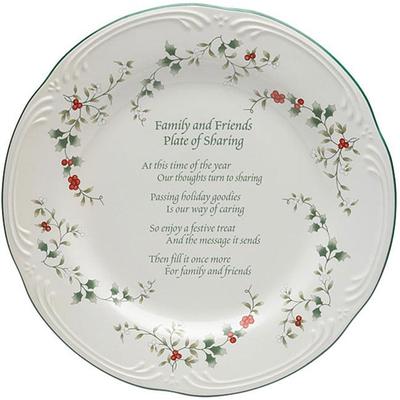
Pfaltzgraff Winterberry 'Family and Friends Plate of Sharing' PlatterCelebrate all through the season with a Winterberry 'Family and Friends Plate of Sharing' plate Serveware is ideal for entertaining and serving Platter has a creamy background with delicately rendered holly branches25,82 $*Shipping: 0,00 $Secure redirect to the provider
-
Uplift Picks Rustic Wooden WiFi Password Sign For Easy Guest Network Sharing Decor Rustic Wooden WiFi Password Sign For Easy Guest Network Sharing DecorWelcome visitors with connection details they can find without asking. This WiFi password sign provides a clear place to display your network name and password while adding rustic charm to the room. The wooden plaque works as practical guest room...45,48 $*Shipping: 0,00 $Secure redirect to the provider
-
What is C networking?
C networking refers to the use of the C programming language to develop networking applications. C is a powerful and efficient language that allows developers to create low-level network programming code for tasks such as socket programming, data transmission, and network protocol implementation. C networking is commonly used in the development of network servers, clients, and other network-related applications due to its speed and flexibility in handling network communication. By using C for networking, developers have fine-grained control over network operations and can optimize performance for specific networking tasks. **
-
What does horizontal tagging mean?
Horizontal tagging refers to the practice of tagging content with keywords or metadata that are related to the specific topic or theme of the content. This allows for easier categorization and organization of content across different platforms or websites. Horizontal tagging helps users to discover related content more easily and can improve the overall user experience by providing relevant recommendations or search results. **
-
Is tagging art or vandalism?
Tagging can be seen as both art and vandalism, depending on the context and intention behind it. Some view tagging as a form of artistic expression and a way to beautify urban spaces, while others see it as a form of vandalism that defaces property and contributes to urban blight. Ultimately, the perception of tagging as art or vandalism is subjective and can vary from person to person. **
-
How many millimeters when tagging?
When tagging, it is recommended to use a font size of at least 3 millimeters to ensure readability and visibility. This size allows the tag to be easily seen and understood from a distance, making it more effective in conveying the intended message. Additionally, using a larger font size can help prevent any confusion or misinterpretation of the tag. **
* All prices are inclusive of VAT and, if applicable, plus shipping costs. The offer information is based on the details provided by the respective shop and is updated through automated processes. Real-time updates do not occur, so deviations can occur in individual cases. ** Note: Parts of this content were created by AI.